


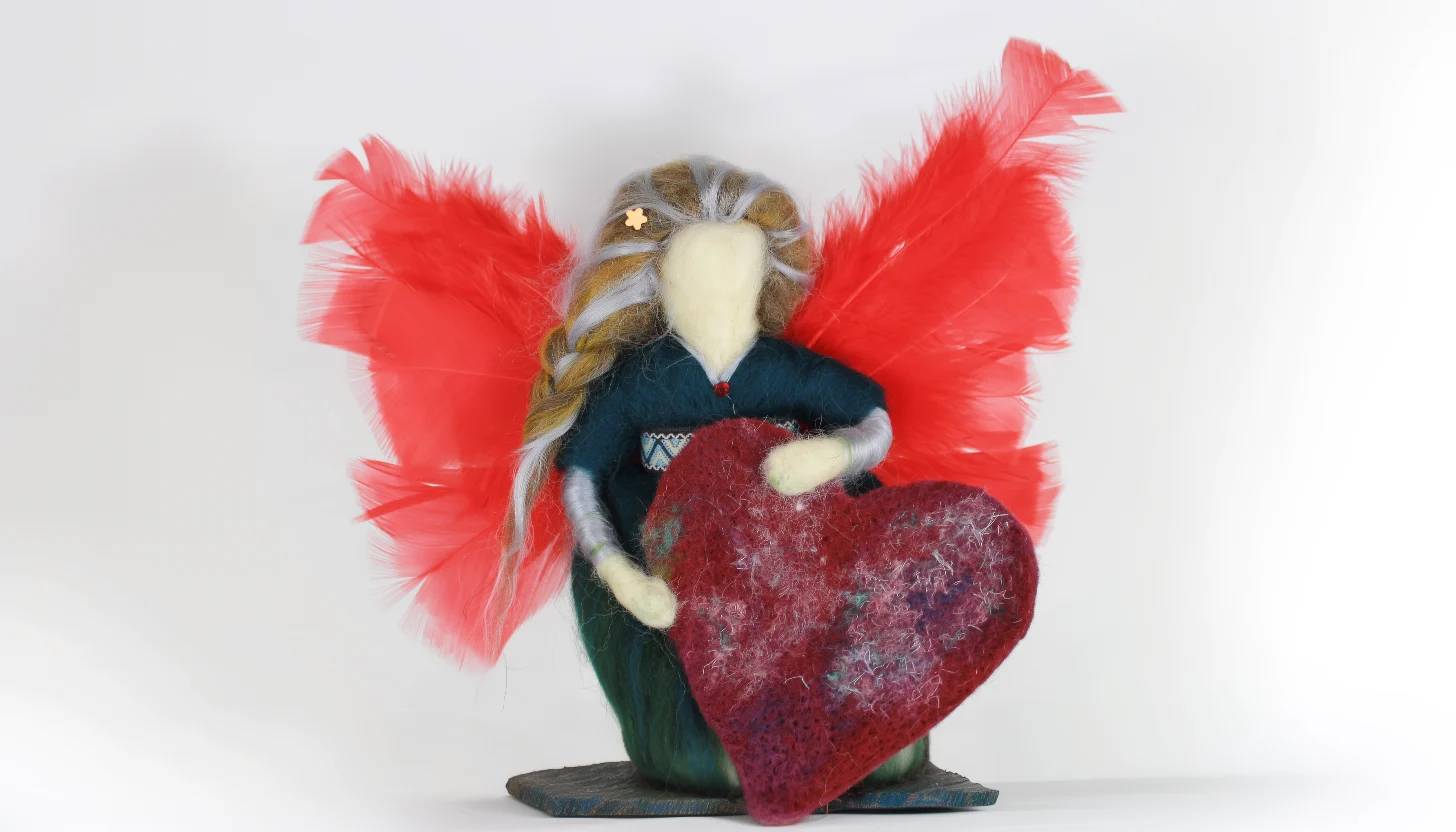
People ask me this often when they see my felted angels. “Is this a Waldorf angel?” Sometimes yes. Sometimes no. The truth is more interesting than a simple label.
It starts with what you leave out
When I studied handcraft in the Polish mountains, one of my teachers said something that stayed with me: “Sometimes the face you don’t carve tells more story than the one you do.”
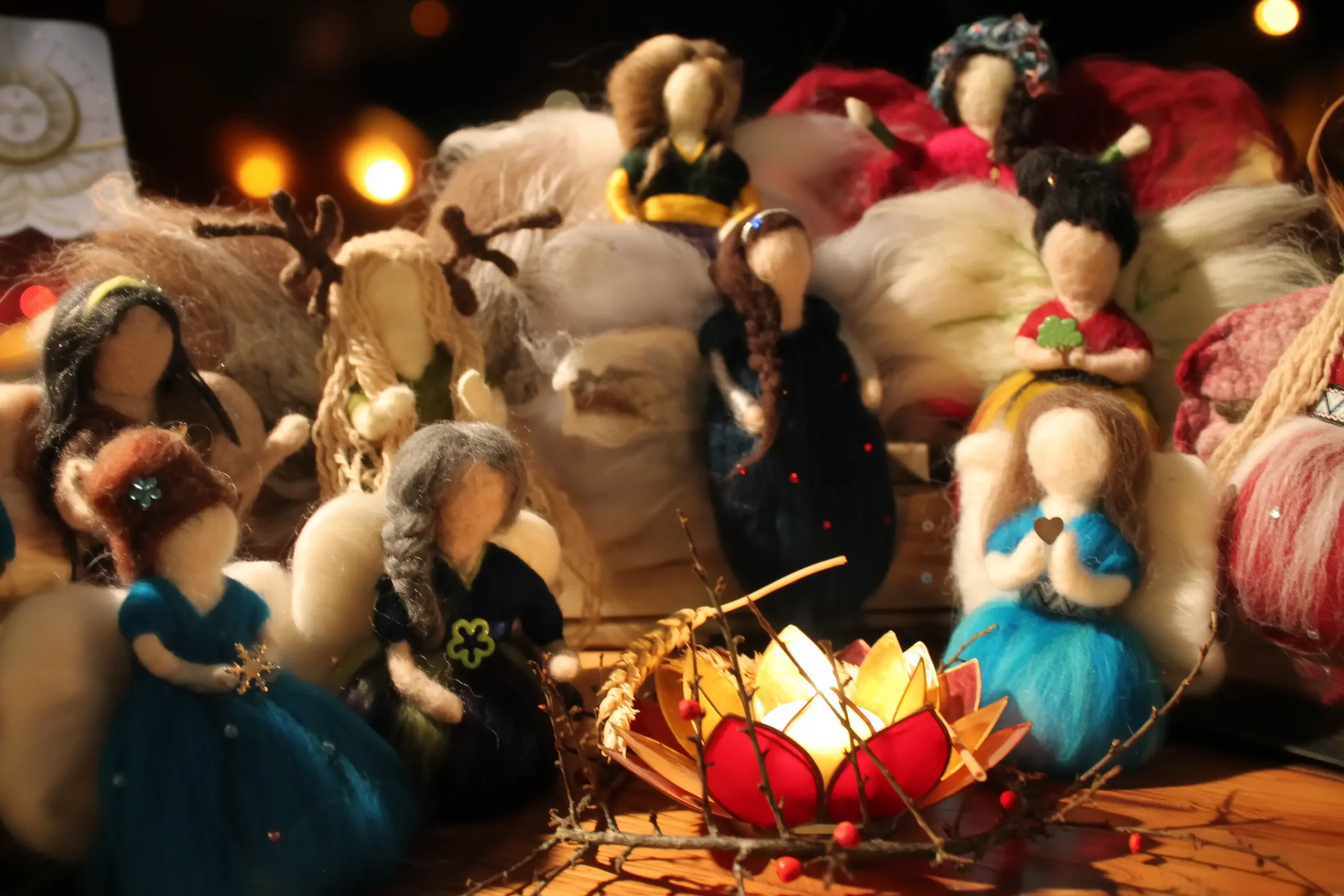
Traditional Waldorf angels have no facial features. No painted smile, no defined eyes. Just the gentle suggestion of a head, maybe a hint of where features might be. This isn’t laziness or simplicity. It’s intentional space.
Without a fixed expression, each person sees what they need to see. A grieving mother might see peace. A child might see joy. The same angel holds different comfort for different hearts. That blank face becomes a mirror.
Natural materials aren’t decoration. They’re the point
Waldorf philosophy, rooted in Rudolf Steiner’s anthroposophy, treats materials as living things with their own qualities. When I work with wool, I’m not just choosing a craft supply. I’m choosing warmth that breathes, texture that invites touch, natural variation that makes each angel unrepeatable.
No plastic. No synthetic fluff. No painted resin.
The wool I use comes from sheep. It holds lanolin, carries slight variations in color, has its own spring and memory. When someone holds one of my angels, they’re touching something that came from the earth and will return to it. There’s honesty in that.
They invite you to touch them
Mass-produced angels sit on shelves. My angels want to be held.
The felting process I use (hours of needle-punching thousands of times) creates density and structure, but the surface stays soft. Slightly fuzzy. Warm under your fingers. When you’re grieving, when you’re scared, when you need something to anchor you, this matters.
I’ve had customers tell me they sleep with their angel nearby. Keep it in a pocket during hard days. One woman said she holds hers during chemotherapy appointments. You can’t do that with a ceramic figurine.
Each one develops its own personality
Here’s where my angels diverge slightly from strict Waldorf tradition. While I follow the principles (natural materials, minimal features, handcrafted with intention), I let each angel tell me who they are as I create them.
Guardian of the Roots got her tree and nest-like hair because she insisted. Guardian of Wisdom needed those deep blues and that knowing posture. I don’t force uniformity.
This comes from my broader craft training. Wood grain tells you where to carve. Clay tells you when it’s ready. Wool tells you when an angel is finished becoming themselves. Waldorf philosophy understands this. It values the relationship between maker and material.
They’re made during grief, for grief
After losing Saoirse, I couldn’t create decorative things. Everything I made needed to matter. The slow, meditative process of needle felting (thousands of small motions, each one intentional) became my way of sitting with grief without drowning in it.
Traditional Waldorf angels were created for children, for festivals, for marking seasons and passages. Mine carry that tradition but extend it. They’re for anyone navigating loss, transition, the tender places where life cracks open.
The facelessness serves this purpose beautifully. Your angel doesn’t have my daughter’s face or your mother’s expression. They have space. Space for whatever you need to see there. These angels are for anyone navigating loss.
Simple doesn’t mean easy
People sometimes assume Waldorf-style angels are simpler to create because they lack detailed faces. They’re wrong.
Creating the right proportions with no features to anchor the eye takes deeper understanding of form. Getting the drape of a dress without losing the body beneath requires constant attention. Making something feel warm and alive without painting personality onto it? That’s craft mastery, not craft basics.
Each of my angels takes 2-3 weeks from first wool to finished guardian. That’s not because I work slowly. It’s because each one needs to develop at their own pace, through my hands but not controlled by my ideas of what they should be.
You’re not buying Waldorf certification. You’re receiving a companion
I trained in traditional craft. I understand Waldorf principles. I use natural materials and honor the intention behind faceless angels.
But I’m not Waldorf-certified and I don’t pretend to be. What I offer is something both simpler and more complex: handmade angels created with therapeutic intention, using traditional techniques, following principles that honor natural materials and healing space.
If you’re looking for a strictly traditional Waldorf angel matching specific festival requirements, there are makers who specialize in that precision. If you’re looking for a handmade guardian that carries comfort through grief, that’s made with the Waldorf understanding that simple forms hold deeper meaning? That’s what I create.
The difference? I think my angels choose their people rather than the other way around.
Each angel in my studio is individually created over 2-3 weeks, with no two exactly alike. If you’d like to see who’s currently available, visit the angel collection. Or if you feel called to have an angel made specifically for your journey, tell me your story.